
About Sports Medicine
Any injuries sustained by playing sports but it can also happen during normal daily activities. These injuries are usually located around the joints. They are usually related to injury of ligaments, capsules, muscle or cartilage.
Images of Sports Injury:
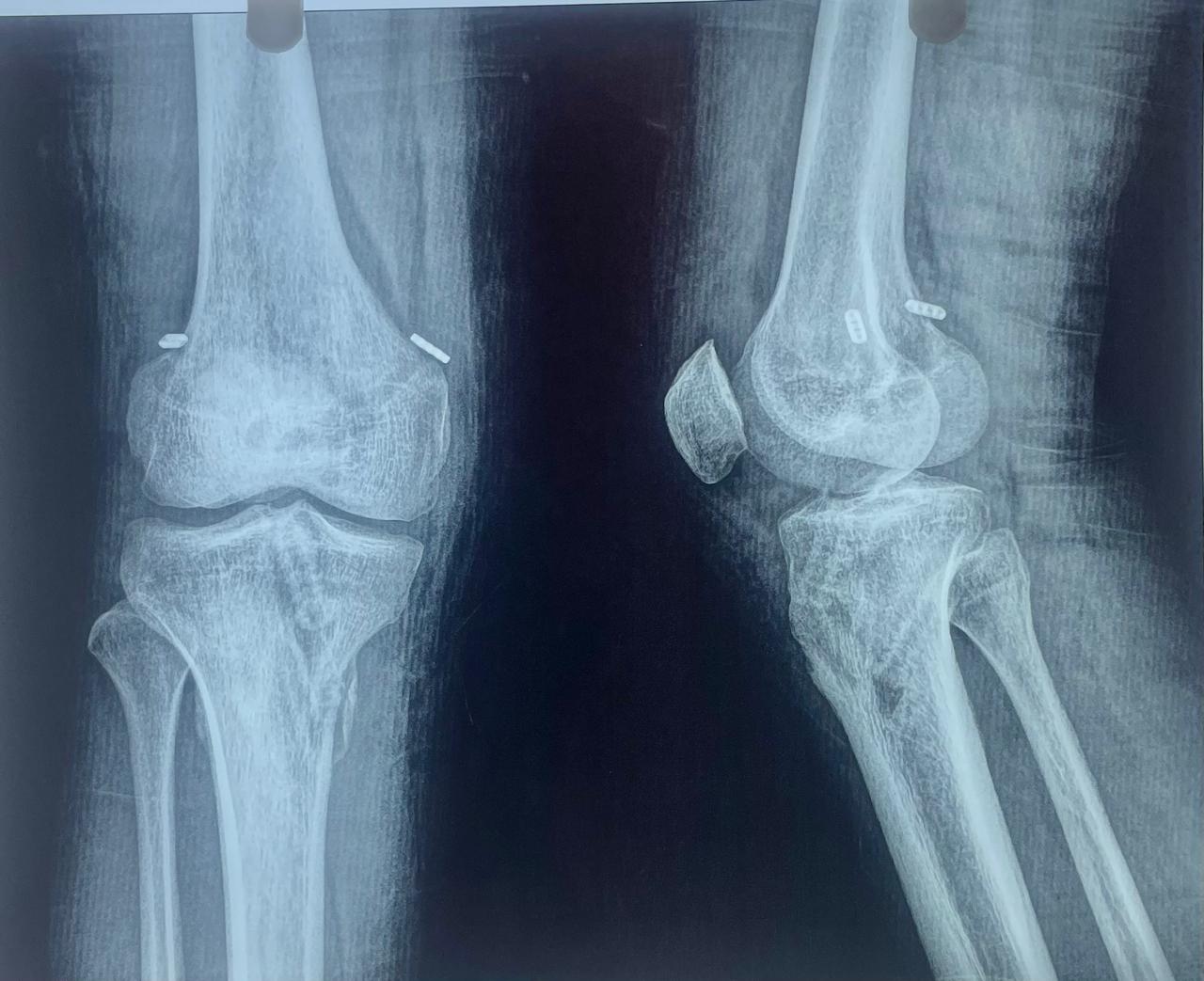
ACL Tear
ACL means Anterior Cruciate Ligament. The ACL is among the group of ligaments inside the knee joint which connect the leg bone and the thigh bone. The ACL runs through the knee’s centre, and crosses the posterior cruciate ligament (PCL) diagonally. Together with the PCL, the ACL provides an important function – controlling the knee as it moves forwards or backwards. The most important function of the ACL is controlling the stability of the knee rotationally as you twist and turn such as in sports like cricket, running, football, rugby, basketball and so on. It is not uncommon for ACL injuries to occur concurrently with another torn ligament or tissue in the knee joint.
Meniscus Tear
Meniscus is a C Shaped semilunar cartilage which act as shock absorbers in the knee joint. They protect the joint from wear and tear. There are two menisci in each knee. A meniscus tear can be painful and debilitating. Unfortunately, it's quite common. In some cases, a piece of the shredded cartilage breaks loose and catches in the knee joint, causing it to lock up.
Multi-Ligamentous Tear
These are serious knee injuries often associated with knee dislocation. This requires urgent treatment. More than one ligament viz. ACL, PCL, MCL, LCL along with other Meniscus can be torn.
Cartilage Injuries
Cartilage injuries are painful and can restrict your sporting or daily activities. They need full assessment and treatment to prevent progression to full blown arthritis.
Shoulder Dislocation
Shoulder is a ball and socket joint which is large range of movement. This makes the joint inherently unstable. One of the most important factors that stabilise the shoulder joint include Capsulolabral complex. This is torn during shoulder dislocation causing Bankart lesion. Every time shoulder dislocates it causes damage to humeral hear which is Hill-Sach lesion. It can also cause damage the glenoid/ shoulder socket. There are techniques to treat a recurrent shoulder dislocation. If there isn’t much damage to the shoulder head and glenoid socket, then All Arthroscopic repair of Bankart lesion is performed by Dr Das which is highly successful. This is followed by his supervised rehab programme.
Rotator Cuff Tear
Rotator Cuff Tear happens more commonly in overhead athletes like bowlers and tennis players. However they are equally common in non-sporting adults.
Ankle Injury
Ankle joint is made up of 3 bones - distal tibia, fibula and talus. These are bound together by ligaments. It is one of the commonnest joint to get injured during sporting activity. The lateral ligament ATFL is the most common ligament injury causing ankle sprain. Ankle has medial and lateral ligament complex, injuries of these leads to instability and pain.
Ligaments around the ankle
Medial :
- Deltoid Ligament
Lateral:
- ATFL, PTFL, CFL
Syndesmosis : This is the joint between distal tibia and fibula.
These injuries can be of varying severity :
- Grade 1 - Stretching of ligament
- Grade 2 - Partial tear
- Grade 3 - Complete tear
Initially these injuries requires rest, ice, elevation and physiotherapy. However Grade 3 sprains requires surgical management.
Cartilage Injuries
Cartilage injuries are painful and can restrict your sporting or daily activities. They need full assessment and treatment to prevent progression to full blown arthritis.
Elbow Injury
Elbow is a joint made up of distal humerus, proximal radius and ulna. These are bound together by ligaments. These ligaments are most commonly injured during elbow dislocation. The elbow ligaments are :
- Lateral ligament complex :
- LUCL, RCL, Annular ligament
- MCL Complex :
- Anterior, Posterior and Transverse
These injuries can be of varying severity :
- Grade 1 - Stretching of ligament
- Grade 2 - Partial tear
- Grade 3 - Complete tear
Elbow dislocation requires urgent reduction followed by rest, ice, elevation and physiotherapy. However Grade 3 sprains requires surgical management.
Painful elbow in Throwing Athlete
In a throwing athlete like Javelin throwers, bowlers and baseball pitchers elbow, the elbow becomes painful. This is due to overload of elbow joint. This can be assessed and treated using arthroscopy. The surgery usually takes about an hour to compete. This can be a day case or you might have to stay in hospital for a day depending upon your rehab and physiotherapy which is supervised by trained physiotherapists.